
In corresponding order to the Taxa Tally:
Apoidea (Bees)
Sauls Jr., A. R. (2021) The Bees of Two Sites in the Big Thicket National Preserve, Texas, with a Consideration of the Effects of a Rare a Rare Flooding Event. Electronic Theses and Dissertations. 364. https://scholarworks.sfasu.edu/etds/364
Herrera-Martinez, A., Smith-Herron, A. J., Traub, N., Yount, K. R. (2017). Prevalence of honey bee (Apis mellifera) parasites across Texas. The Southwestern Naturalist. 62(4):255-262. DOI:10.1894/SWNAT-D-17-00027.1
Astacidea (Crayfish)
Johnson, D. P. (2008). Descriptions of two new crayfishes of the genus Fallicambarus from southeast Texas with notes on the distribution of F.(F.) macneesei. Zootaxa. 1717, 1-23. pdf
Cicindelidae (Tiger Beetles)
Duran, D. P., Laroche, R. A., Roman, S. J., Godwin, W., Herrmann, D. P., Bull, E., Egan, S. P. (2024). Species delimitation, discovery and conservation in a tiger beetle species complex despite discordant genetic data. Scientific Reports. 14:6617. https://doi.org/10.1038/s41598-024-56875-9
Laroche, R. A., Duran, D. P., Lee, C. A., Godwin, W., Roman, S. J., Herrmann, D. P., Egan, S. P. (2023). A genomic test of subspecies in the Eunota togata species group (Coleoptera: Cicindelidae): Morphology masks evolutionary relationships and taxonomy. Molecular Phylogenetics and Evolution. 189. https://doi.org/10.1016/j.ympev.2023.107937
Coleoptera (Water Beetles)
Jiang, M.J., M.O. Way, R. Yoder, W. Zhang, and J.C. Cheng. (2006). Elytral color dimorphism in rice water weevil (Coleoptera:Curculionidae): Occurrence in spring populations and relationship to female reproductive development. Annals of the Entomological Society of America. 99: 1127-1132.
Gyrinidae (Whirligig/Water Beetles)
Realzola, E., Cook, J.L., & Cook, T.J., (2007). Composition of Gyrinid Aggregations in the East Texas primitive Big Thicket (Coleoptera: Gyrinidae). The Coleopterists Bulletin, 61(4), 495-502. https://doi.org/10.1649/0010-065X(2007)61
Gastropoda (Land Snails)
Coles, B. F., Nekola, J. (2007). Vertigo malleata, a new extreme calcifuge land snail (Gastropoda: Vertiginidae) form the Atlantic and Gulf coastal plains of the USA. NAUTILUS-GREENVILLE-, 121(1), 17.
Formicidae (Ants)
Wilson, C. M., Smith-Herron, A. J., Cook, J. L. (2016). Morphology of the male genitalia of Brachymyrmex and their implications in the Formicinae phylogeny. Journal of Hymenoptera Research. 50:81-95. DOI:10.3897/JHR.50.8697
Herpetofauna (Amphibians and Snakes)
Glorioso, B. M. & Waddle, J.H. (2017).Nocturnal arboreality in snakes in the swamplands of the Atchafalaya Basin of south-central Louisiana and Big Thicket National Preserve of southeast Texas. The Journal of North American Herpetology, 2017(1):11-18
Nicoletto, P. (2013). Effects of Hurricane Rita on the herpetofauna of Village Creek State Park, Hardin County, Texas. The Southwestern Naturalist, 58(1), 64-69. http://www.jstor.org/stable/23362673
Noctuidae (Moths)
Manrique, V., Diaz, R., Overholt, W.A., Pogue, M.G., Vitorino, M. (2012). Description and biology of Paectes longiformis Pogue, a new species from Brazil (Lepidoptera: Euteliidae) as a potential biological control agent of Brazilian peppertree in Florida. Biocontrol Science and Technology. 22:163-185.
Pogue, M.G. (2012). The Aventiinae, Boletobiinae, Eublemminae, Pangraptinae, Phytometrinae, and Scolecocampinae (Lepidoptera: Noctuoidea: Erebidae) of Great Smoky Mountains National Park, U.S.A. Zootaxa. 3153:1-31.
Landolt, P.J., Jang, E.B., Carvalho, L.A., Pogue, M.G. (2011). Attraction of pest moths (Lepidoptera: Noctuidae, Crambidae) to floral lures on the island of Hawaii. Hawaiian Entomological Society Proceedings. 43:49-58.
Dewaard, J.R., Mitchell, A., Keena, M.A., Gopurenko, D., Boyken, L.M., Armstrong, K.F., Pogue, M.G., Lima, J., Floyd, R., Hanner, R., Humble, L.M. (2010). Toward a global barcode library for Lymantria (Lepidoptera: Lymantriinae) tussock moths of biosecurity concern. PLoS One. 5(12):1-10.
Pogue, M.G. (2010). A new species of Schinia Hübner from the Southeastern United States (Lepidoptera: Noctuidae: Heliothinae). ZooKeys. 52:57-64.
Pogue, M.G. (2010). The Acontiinae and Eublemminae of Great Smoky Mountains National Park (Lepidoptera: Noctuidae). Zootaxa. 2499:1-20.
Pogue, M.G., Honey, M., Zilli, A. (2010). New synonymy in a North American species of Pyrrhia Hübner, \[1821] (Lepidoptera: Noctuidae). Proceedings of the Entomological Society of Washington. 112(2):274-280.
Sanders, N.J., Pogue, M.G., Dunn, R.R. (2010). Noctuid moth diversity along a temperate elevational gradient: testing the role of environmental factors, MDE, and Rapoport's rule. Ecography. p. 75-87.
Pogue, M.G. (2010). The Hadeninae (Lepidoptera: Noctuidae) of Great Smoky Mountains National Park, U.S.A.. Zootaxa. 2380:1-75.
Pogue, M.G. (2009). Three new cryptic species within the Dargida procinctus (Grote) complex (Lepidoptera: Noctuidae: Hadeninae) from the Neotropics. Proceedings of the Entomological Society of Washington. 111:686-697.
Pogue, M.G. (2009). A review of the Tripudia quadrifera (Zeller) (Lepidoptera: Noctuidae) species complex. Proceedings of the Entomological Society of Washington. 111:68-97.
Lavigne, R.J., Pogue, M.G. (2009). Ethology of Omniablautus nigronotum (Wilcox) (Diptera: Asilidae) in Wyoming. Proceedings of the Entomological Society of Washington. 111:1-6.
Pogue, M.G. (2009). Lepidoptera Biodiversity. In: Foottit, R., Adler, P., editors. Insect Biodiversity: Science and Society. 1st edition. Blackwell Science Publishing. Oxford, England. p. 263-293.
Simmons, R.B., Pogue, M.G. (2009). Redescription of two, often-confused Noctuid pests Copitarsia Decolora (Guenee) and C. Incommoda (Walker) (Lepidoptera: Noctuidae). Annals of the Entomological Society of America. 97:1159-1164.
Pogue, M.G., Simmons, R. (2008). A new pest species of Copitarsia Hampson from the Neotropical Region feeding on Asparagus and cut flowers (Lepidoptera: Noctuidae). Annals of the Entomological Society of America. 101:743-762.
Pogue, M.G. (2008). Rhodoecia Hampson 1908 a new synonym of Pyrrhia Hubner \[1821] 1816 (Lepidoptera: Noctuidae: Heliothinae). Proceedings of the Entomological Society of Washington. 110:810.
Pogue, M.G. (2008). Inventory of the nolidae, erebidae, and noctuidae (lepidoptera) of Plummers Island, Maryland. Bulletin of the Biological Society of Washington. (15)107-120.
Pogue, M.G. (2007). Revision of the Genus Psectrotarsia Dognin 1907 (Lepidoptera: Noctuidae: Heliothinae). Zootaxa. 1637:1-19.
Pogue, M.G., Schaefer, P.W. (2007). A review of potentially invasive species of Lymantria Hüebner 1819 from subtropical and temperate regions of Asia including the descriptions of three new species. Forest Health Technology Enterprise Team. FHTE:1-223.
Pogue, M.G. (2006). Nomenclatural validation of four North American species of heliothinae (lepidoptera: noctuidae). Zootaxa. 1283: 25-36.
Pogue, M.G. (2006). The Noctuinae (Lepidoptera: Noctuidae) of Great Smoky Mountains National Park. Zootaxa. 1215:1-95.
Pogue, M.G. (2005). The Plusiinae of Great Smoky Mountains National Park (Lepidoptera: Noctuidae). Zootaxa. 1032:1-28.
Pogue, M.G. (2005). Book review: Butterflies of Oklahoma, Kansas, and north Texas, by John M. Dole, Walter B. Gerard, and John M. Nelson. American Entomologist. 51:117.
Pogue, M.G. (2004). A new species of Schinia Hubner from riparian habitats along the Colorado River in the Grand Canyon (Lepidoptera: Noctuidae: heliothinae). Zootaxa. 788:1-4
Pogue, M.G., Harp, C.E. (2004). Systematics of Schinia chrysellus (Grote) complex: revised status of Schinia alencis (Harvey) with a description of two new species (Lepidoptera: Noctuidae: Heliothinae). Zootaxa. 898:1-35
Pogue, M.G. (2004). Characters to differentiate adult males of the corn earworm, Helicoverpa zea (Boddie) and the old world bollworm, Helicoverpa armigera (Hübner)(Lepidoptera: Noctuidae: Heliothinae). Journal of Economic Entomology. 97:1222-1226
Simmons, R.B., Scheffer, S.J., Pogue, M.G. (2004). Systematics of the Copitarsia Incommoda (Walker) pest complex (Lepidoptera: Noctuidae). Annals of the Entomological Society of America. 97(4):675-680.
Pogue, M.G., Harp, C.E. (2004). A review of the schinia regia (strecker) species complex with a description of a new species (lepidoptera: noctuidae: heliothinae). Zootaxa. 473:1-32
Pogue, M.G., Harp, C.E. (2004). A review of the Schinia Tertia (Grote) Species Complex (Lepidoptera: Noctuidae: Heliothinae). Zootaxa. 473:1-32.
Knudson, E., Bordelon, C., Pogue, M.G. (2003). A new species of schinia huebner (lepidoptera: noctuidae: heliothinae) from texas, oklahoma, and louisiana.. Zootaxa. 382:1-7
Pogue, M.G., Harp, C.E. (2003). Systematics of Schinia Cupes (Grote) Complex: revised status of Schinia Crotchii (Hy. Edwards) (Lepidoptera: Noctuidae: Heliothinae). Zootaxa. 294:1-16.
Pogue, M.G., Harp, C.E. (2003). Revised status of Schinia Unimacula Smith including morphological comaprisons with Schinia Obliqua Smith (Lepidoptera: Noctuidae: Heliothinae). Journal of Lepidopterists Society. 226:1-8.
Lalanne-Cassou, B., Pogue, M.G. (2003). Deux nouveaux Paratrachea des Antilles (Lepidoptera, Noctuidae, Noctuinae). Revue Francaise D'Entomologie. 25(4):157-164.
Knudson, E., Bordelon, C., & Pogue, M. G. (2003). A new species of Schinia Hübner (Lepidoptera: Noctuidae: Heliothinae) from Texas, Oklahoma, and Louisiana. Zootaxa, 382, 1-7. http://dx.doi.org/10.11646/zootaxa.382.1.1
Mordellidae (Tumbling Flower Beetles)
Cook, T. J., Clopton, R. E., & Cook, J. L. (2011). Neoasterophora megasilvestrensis n. gen., n. sp.(Apicomplexa: Eugregarinida: Actinocephalidae: Pileocephalinae) parasitizing Cheumatopsyche analis (Trichoptera: Hydropsychidae) in the Texas big thicket. Comparative Parasitology, 78(1), 56-62. pdf
Nematoda (Roundworms)
Powers, T. O., Harris, T. S., Higgins, R. S., Mullin, P. G., & Powers, K. S. (2021). Nematode biodiversity assessments need vouchered databases: A BOLD reference library for plant-parasitic nematodes in the superfamily Criconematoidea. Genome, 64(3), 232-241. DOI:10.1139/gen-2019-0196
Powers, T., Harris, T., Higgins, R., Mullin, P., & Powers, K. (2018). Discovery and identification of Meloidogyne species using COI DNA barcoding. Journal of Nematology, 50(3), 399. pdf
Munawar, M., Powers, T. O., Zhongling, T., Timothy, H., Higgins, R., Zheng, J. (2018). Description and Distribution of Three Criconematid Nematodes from Hangzhou, Zhejiang Province, China. Journal of Nematology, 50(1). DOI: 10.21307/jofnem-2018-010 pdf
Olson, M., Harris, T., Higgins, R., Mullin, P., Powers, K., Olson, S. and Powers, T.O., (2017). Species Delimitation and Description of Mesocriconema nebraskense n. sp.(Nematoda:Criconematidae), a Morphologically Cryptic, Parthenogenetic Species from North American Grasslands. Journal of Nematology, 49(1) 42-68.
Powers, T. O., Harris, T., Higgins, R., Mullin, P., and Powers, K. (2017). An 18S rDNA Perspective on the Classification of Criconematoidea. Journal of Nematology 49(3):236–244. 2017.
Powers, T. O., Bernard, E. C., Harris, T., Higgins, R., Olson, M., Olson, S., Lodema, M.,Matczyszyn, J., Mullin, P., Sutton, L., Powers. K. S. (2016). Species discovery and diversity in Lobocriconema (Criconematidae: Nematoda) and related plant-parasitic nematodes from North American ecoregions. Zootaxa. 4085 (3): 301–344. http://doi.org/10.11646/zootaxa.4085.3.1
Powers, T.O., Mullin, P., Higgins, R., Harris, T. and Powers, K.S., (2016). Description of Mesocriconema ericaceum n. sp.(Nematoda: Criconematidae) and notes on other nematodespecies discovered in an ericaceous heath bald community in Great Smoky Mountains NationalPark, USA. Nematology, 18(8), pp.879-903. http://dx.doi.org/10.1163/15685411-00003001
Powers T.O., Bernard E. C., Harris T., Higgins R., Olson M., Lodema M.., Mullin P, Sutton L., Powers K. S. (2014). COI haplotype groups in Mesocriconema (Nematoda: Criconematidae) and their morphospecies associations. Zootaxa, 3827(2), 101-146. doi: 10.11646/zootaxa.3827.2.1.
Odonata (Dragonflies)
Cantu, V., Halloran, B., Smith-Herron, A. J., Cook, T. J. (2019). Helminths of the Attwater's Prairie-Chicken Tympanchus cupido attwateri in Texas. The Southwestern Naturalist. 63(3):169. DOI:10.1894/0038-4909-63-3-169
Smith-Herron, A. J., Cook, T. J. (2018). Gregarines Infecting Ischnura spp. in Louisiana, U.S.A., Including Description of Geneiorhynchus gradalis n. sp. (Apicomplexa: Actinocephalidae: Actinocephalinae) from Ischnura ramburii (Odonata: Zygoptera) in St. John the Baptist Parish, Louisiana, U.S.A. Comparative Parasitology. 85(1):42-47. DOI:10.1654/1525-2647-85.1.42
Sisson, M. S., Santamaria, C. A., Smith-Herron, A. J., Cook, T. J. (2016). Geographical Color Pattern of Argia apicalis (Odonata: Coenagrionidae) in the Absence of Molecular Variation. Florida Entomologist. 99(3):355-362 (2016). https://doi.org/10.1653/024.099.0303
Smith-Herron, A. J., (2015). Hoplorhynchus aster n. sp. (Apicomplexa: Actinocephalidae: Menosporinae) and Anguilloforma marcelyni gen. et n. sp. (Apicomplexa: Actinocephalidae: Acanthosporinae) Infecting Ischnura ramburii and Enallagma civile (Zygoptera: Coenagrionidae) from Texas, U.S.A. Comparative Parasitology. 82(2):211-218. DOI:10.1654/4763.1
Smith-Herron, A. J., Cook, J. L., Cook, T. J. (2014). Brevispina tasii (Brevispinidae) n. fam., n. gen., n. sp. (Apicomplexa: Eugregarinida: Stenophoroidea) Parasitizing the Crane Fly Tipula umbrosa (Diptera: Tipulidae: Tipulinae) from East Texas Leaf Litter. Comparative Parasitology. 81(1):1-9. DOI:10.1654/4656.1
Smith-Herron, A. J., Cook, T. J. (2014). Setasedecim fursus n. gen., n. sp. (Apicomplexa: Actinocephalidae: Acanthosporinae) from Ischnura ramburii (Odonata: Zygoptera) in Imperial County, California, U.S.A. Comparative Parasitology. 81(1):79-84. DOI:10.1654/4663.1
Cook, T. J., Smith-Herron, A. J. (2013). Gregarines Infecting Ischnura spp. in Texas, U.S.A., Including Description of Septemlaterospora rasberryi n. gen. n. sp. (Apicomplexa: Actinocephalidae: Acanthosporinae) and Revision of Steganorhynchus dunwoodyi (Apicomplexa: Actinocephalidae: Menosporinae). Journal of Parasitology. 100(1). DOI:10.1645/13-236.1
Pseudoscorpions (False Scorpions)
Clopton, R. E., Cook, T. J., & Cook, J. L. (2007). Revision of Geneiorhynchus Schneider, 1875 (Apicomplexa: Eugregarinida: Actinocephalidae: Acanthosporinae) with Recognition of Four New Species of Geneiorhynchus and Description of Geneiorhynchus manifestus n. sp. Parasitizing Naiads of the Green Darner, Anax junius (Odonata: Aeshnidae) in the Texas. Comparative Parasitology, 74(2), 273-285. https://doi.org/10.1654/4286.1
Tardigrada (Waterbears or Moss Piglets)
Hinton, J.G., Meyer, H.A., McDaniel, N.D., Bergeron, C., Keely, S.J. & Matte, A. (2014). Lone Star Bears: The Tardigrada of Big Thicket National Preserve, Texas. Southeastern Naturalist, 13(5), 131-136. https://www.jstor.org/stable/26454947
Meyer, H.A., Domingue, M.N., & Hinton, J.G. (2014). Tardigrada of the West Gulf Coastal Plain, with Descriptions of Two new Species from Louisiana.Southeastern Naturalist, 13(5), 117-130. https://www.jstor.org/stable/26454946
Hinton, J. G., Meyer, H. A., McDaniel, N. D., Bergeron, C. B., Keely, S. J., & Matte, A. (2014). Lone Star Bears: The Tardigrada of Big Thicket National Preserve, Texas. Southeastern Naturalist, 13(sp5), 131-136. https://bioone.org/journals/Southeastern-Naturalist/volume-13/issue-sp5/058.013.s512/Lone-Star-Bears--The-Tardigrada-of-Big-Thicket-National/10.1656/058.013.s512.short
Trematoda (Parasites of Aquatic Ectotherms)
Herzog, T. L., Barger, M. A. (2019). A New Species of Dieffluvium (Cestoda: Caryophyllidea) from Smallmouth Buffalo (Ictiobus bubalus) from the Big Thicket National Preserve, Texas, U.S.A. Comparative Parasitology. 86(2) 73-78. https://doi.org/10.1654/1525-2647-86.2.73
Barger, M. A. (2018). A New Species of Allacanthochasmus (Trematoda: Cryptogonimidae) from White Bass, Morone chrysops (Moronidae), from Lake Livingston, Texas, U.S.A. Comparative Parasitology. 85(1), 73-77. https://doi.org/10.1654/1525-2647-85.1.73
Barger, M. A. (2018). Description of a New Species of Caecincola (Trematoda: Cryptogonimidae) with a Key to the Species. Comparative Parasitology. 85(1) 66-72. https://doi.org/10.1654/1525-2647-85.1.66
Dutton, H., & Barger, M. (2017). Comparison of Metazoan Parasite Diversity in Catfishes Within and Outside the Big Thicket National Preserve, Texas, U.S.A. Comparative Parasitology, 84(1), 21-27. https://doi.org/10.1654/1525-2647-84.1.21
Kusy, H., & Barger, M. (2017). A New Species of Macroderoides (Trematoda: Macroderoididae) from Spotted Gar, Lepisosteus oculatus (Lepisosteidae), in the Big Thicket National Preserve and Surrounding Areas, Texas, U.S.A. Comparative Parisitology, 84(1), 28-31. doi:10.1654/1525-2647-84.1.28
Kusy, H., & Barger, M. (2017). A New Species of Caecincola (Trematoda: Cryptogonimidae) from White Crappie (Pomoxis annularis) in Southeastern Texas, U.S.A. Comparative Parisitology, 84(1), 32-35. doi:10.1654/1525-2647-84.1.32
Orcutt, G., & Barger, M. (2017). A New Species of Caecincola (Trematoda: Cryptogonimidae) from Largemouth Bass (Micropterus salmoides) in the Big Thicket National Preserve, Texas, U.S.A. Comparative Parisitology, 84(2), 155-158. doi:10.1654/1525-2647-84.2.155
Richardson, D. J., Barger, M. A. (2017). New Host Record for the Fish Leech, Myzobdella reducta (Hirudinida: Piscicolidae) from Texas. The Texas Journal of Science. 67(4), 133-134. pdf
Barger, M. (2016). A New Species of Prosorhynchoides (Trematoda: Bucephalidae) from White Bass, Morone chrysops (Moronidae), in the Big Thicket National Preserve, Texas, U.S.A. Comparative Parisitology, 83(1), 74-77. doi:10.1654/1525-2647-83.1.74
Barger, M., & Wellenstein, D. (2015). Morphological Confirmation of Homalometron (Trematoda: Apocreadiidae) Species in Freshwater Fishes in Southeastern Texas, U.S.A., with Description of Two Species. Comparative Parisitology, 82(2), 248-253. https://doi.org/10.1654/4754.1
Dutton, H., & Barger, M. (2015). Metazoan Parasites of Catfishes in the Big Thicket National Preserve and Surrounding Areas, Texas, U.S.A. Haley R. Dutton and Michael A. Barger Comparative Parasitology 2015 82 (2), 187-197. Comparative Parasitology, 82(2), 187-197. https://doi.org/10.1654/4743.1
Dutton, H., & Barger, M. (2014). A New Genus and Species of Caryophyllaeid (Cestoda: Caryophyllidea) from Spotted Suckers, Minytrema melanops (Catostomidae), in the Big Thicket National Preserve, Texas, U.S.A. Comparative Parisitology, 81(1), 23-26. https://doi.org/10.1654/4620.1
Barger, M. (2014). A New Species of Azygia (Trematoda: Azygiidae) from Pirate Perch, Aphredoderus sayanus (Aphredoderidae), in the Big Thicket National Preserve, Texas, U.S.A. Comparative Parasitology, 81(2), 257-259. https://doi.org/10.1654/4704.1
Barger, M. A. (2012). Redescription of Polylekithum catahoulensis (Trematoda) and Anatomical Differentiation from Polylekithum ictaluri. Comparative Parasitology. 79(1), 143–146. Pdf
Barger, M. (2011). Tests of Ecological Equivalence of Two Species of Terrestrial Gastropods as Second Intermediate Hosts of Panopistus pricei (Trematoda: Brachylaimidae). Journal of Parasitology. 97(1), 8-13. http://dx.doi.org/10.1645/GE-2528.1
Barger, M. (2010). A New Species of Lissorchis (Trematoda: Lissorchiidae) from Creek Chubsuckers (Erimyzon oblongus) in the Big Thicket National Preserve, Texas, U.S.A. Comparative Parisitology, 77(1), 1-5. https://doi.org/10.1654/4415.1
Barger, M. (2010). A New Species of Caecincola (Trematoda: Cryptogonimidae) from Spotted Bass (Micropterus punctulatus) in the Big Thicket National Preserve, Texas, U.S.A. Comparative Parasitology, 77(1), 6-8. https://doi.org/10.1654/4417.1
Unionoida (Mussels)
Tarter, A. A., Ford, D. F., Symonds, D. E., Ford, N. B., & Schwalb, A. N. (2022). Impact of extreme climatic events on unionid mussels in a subtropical river basin. Hydrobiologia, 1-16. pdf
Ford, D. F., Plants-Paris, E. D., & Ford, N. B. (2022). Density, Apparent Survival, and Local Population Size of Louisiana Pigtoe (Pleurobema riddelli) in the Neches River, Texas. Freshwater Mollusk Biology and Conservation, 25(2), 74-8. https://doi.org/10.31931/fmbc-d-21-00003
Ford, D.F., Plants-Paris, E.D. & Ford, N.B. (2020). Comparison of Louisiana Pigtoe (Pleurobema riddellii, Mollusca, Unionidae) growth at three different locations in the Neches River Basin of East Texas. Hydrobiologia 847, 2021–2033. https://link.springer.com/article/10.1007/s10750-020-04228-8
Thesis: Tarter, A. A. (2019). Distribution of unionid mussels in the Big Thicket region of Texas. pdf
Dascher, E. D., Burlakova, L. E., Karatayev, A. Y., Ford, D. F., & Schwalb, A. N. (2018). Distribution of unionid freshwater mussels and host fishes in Texas. A study of broad-scale spatial patterns across basins and a strong climate gradient. Hydrobiologia, 810, 315-331. https://doi.org/10.1007/s10750-017-3168-5
Walters, A. D., Ford, D., Chong, E. T., Williams, M. G., Ford, N. B., Williams, L. R., & Banta, J. A. (2017). High-resolution ecological niche modelling of threatened freshwater mussels in east Texas, USA. Aquatic Conservation Marine and Freshwater Ecosystems, 27(6), 1251-1260. https://doi.org/10.1002/aqc.2784
Ford, D. F., Walters, A. D., Williams, L. R., Williams, M. G., & Ford, N. B. (2016). Mussel assemblages in streams of different sizes in the Neches River basin of Texas. Southeastern Naturalist, 15(1), 26-40. https://bioone.org/journals/southeastern-naturalist/volume-15/issue-1/058.015.0103/Mussel-Assemblages-in-Streams-of-Different-Sizes-in-the-Neches/10.1656/058.015.0103.short
Ford, D. F., Oliver, A. M. (2015). The known and potential hosts of Texas mussels: Implications for future research and conservation efforts. Freshwater Mollusk Biology and Conservation, 18, 1-14. pdf
Ford, N. B., Heffentrager, K., Ford, D. F., Walters, A. D., & Marshall, N. (2014). Significant Recent Records of Unionid Mussels in Northeast Texas Rivers. Freshwater Mollusk Biology and Conservation, 17(1), 8-15. https://doi.org/10.31931/fmbc.v17i1.2014.8-15
Macro Fungi (Mushrooms)
Lewis, D. P., Ammirati, J. F., Liimatainen, K., Niskanen, T., Ovrebo, C. L., Smith, M., Justice, J., Kaminsky, L. (2023). Cortinarius Watsoneae, A New Species of Agaricomycetes (Cortinariaceae) from the Gulf States. Journal of the Botanical Research Institute of Texas, 17(1), 259–264. https://doi.org/10.17348/jbrit.v17.i1.1294
Lewis, D. P., Ovrebo, C. L., & Justice, N. J. (2020). Literature update for Texas fleshy basidiomycota with new vouchered records for southeast Texas. Journal of the Botanical Research Institute of Texas, 14(2), 465-479. pdf
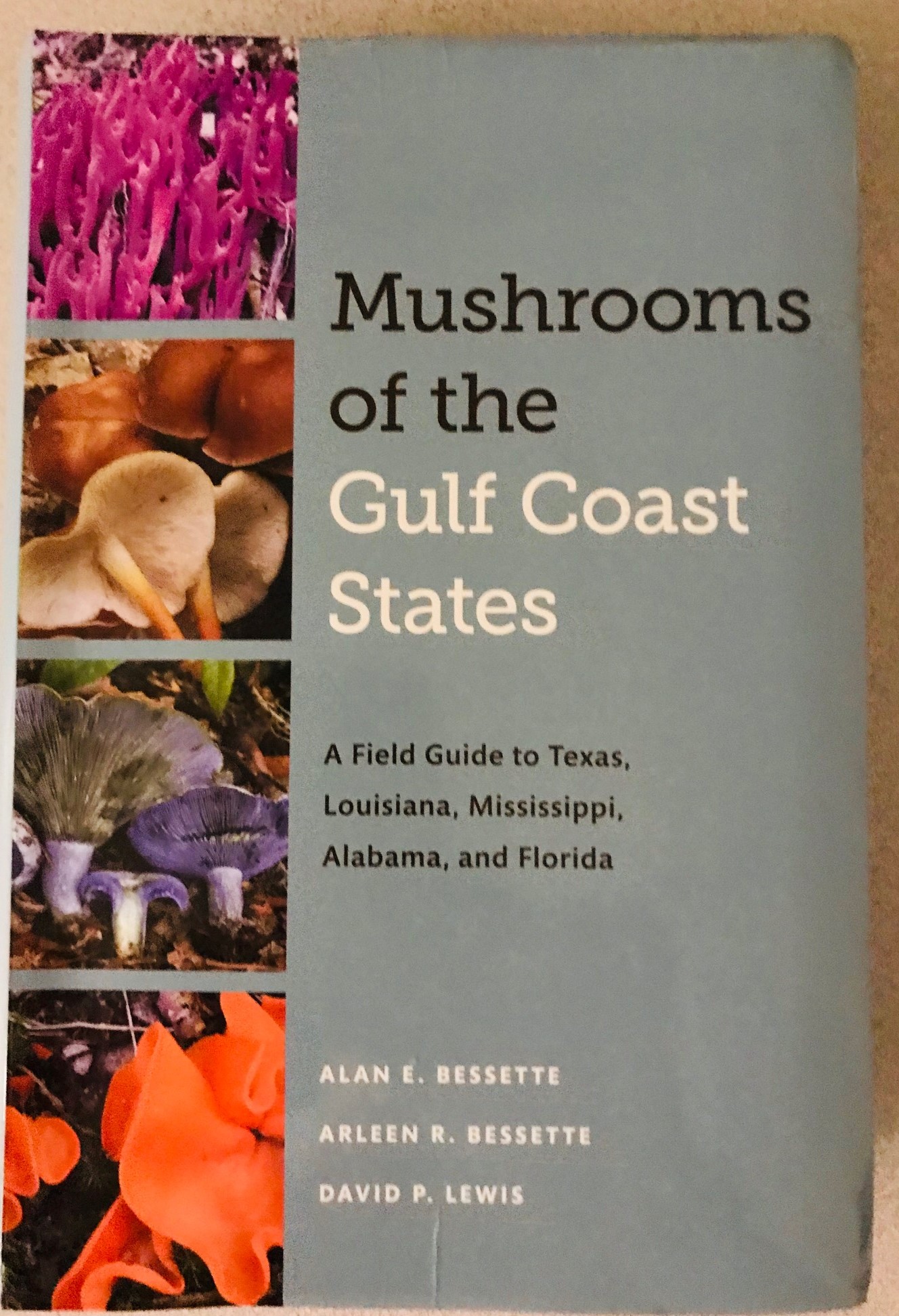
Bessette, A.E., Bessette, A.R., Lewis. D. (2019). Mushrooms of the Gulf Coast States: A Field Guide to Texas, Louisiana, Mississippi, Alabama, and Florida. University of Texas Press. book cover image
Buyck, B., et. al. (2017). Fungal Biodiversity Profiles 21-30. Cryptogamie, Mycologie. 38 (1), 101-146. doi/10.7872/crym/v38.iss1.2017.101
Buyck, B., Hofstetter, V., & Olariaga, I. (2016). Setting the record straight on North American Cantharellus. Cryptogamie, Mycologie, 37(3), 405-417. https://doi.org/10.7872/crym/v37.iss3.2016.405.
Buyck, B., Moreau, P., Courtecuisse, R., Kong, A., Roy, M., & Hofstetter, V. (2016). Cantharellus coccolobae sp. nov. and Cantharellus garnieri, Two Tropical Members of Cantharellus subg. Cinnabarinus. Cryptogamie, Mycologie, 37(3), 391-403. https://doi.org/10.7872/crym/v37.iss3.2016.391.
Buyck, B., Olariaga, I., Justice, J., Lewis, D., Roody, W., & Hofstetter, V. (2016). The dilemma of species recognition in the field when sequence data are not in phase with phenotypic variability. Cryptogamie, Mycologie, 37(3), 367-389. https://doi.org/10.7872/crym/v37.iss3.2016.367
Buyck, B., Olariaga, I., Looney, B., Justice, J., & Hofstetter, V. (2016). Wisconsin chanterelles revisited and first indications for very wide distributions of Cantharellus species in the United States East of the Rocky Mountains. Cryptogamie, Mycologie, 37(3), 345-366. https://doi.org/10.7872/crym/v37.iss3.2016.345.
Petersen, R.H., K.W. Hughes, J. Justice, & D.P. Lewis. (2014). A new species of Gomphus from Southeastern United States. N. Amer. Fungi 9(9):1–13. http://dx.doi.org/10.2509/naf2014.009.009
Buyck, B., Lewis, D. P., Eyssartier, G., Hofstetter, V. (2010). Cantharellus quercophilus sp. nov. and its comparison to other small, yellow or brown American chanterelles. Cryptogamie, Mycologie, 31 (1), 17-33. pdf
Lewis, D. P., & Ovrebo, C. L. (2009). Mycological Literature on Texas Fleshy Basidiomycota, Two New Combinations, and New Fungal Records for Texas. Journal of the Botanical Research Institute of Texas, 3(1), 257–271. http://www.jstor.org/stable/41972163
Ortiz-Santana, B., Lewis, D. P., & Both, E. E. (2009). A new Boletus from North America. Mycotxon, 110, 211-217. http://www.mycotaxon.com/
Hughes, K. W., Petersen, R. H., Mata, J. L., Psurtseva, N. V., Kovalenko, A. E., Morozova, O. V., Lickey, E.B., Blanco, J.C., Lewis, D.P, Nagasawa, E.I. and Halling, R.E.. (2007). Megacollybia (Agaricales). Reports of the Tottori Mycological Institute, 45, 1-57. pdf
Lewis, D.P., & Cibula, W. (2000). Studies on Gulf Coast Agarics (Basidiomycota: Agaricaceae): Notes on some interesting and rare species. Texas Journal of Science, 52, 65-78. pdf
Lewis, D. & McGraw, J. (1984) Studies on Big Thicket Agaricales. The Southwestern Naturalist 29(3), 257-264. doi: 10.2307/3671356
Lewis, D., & McGraw, J. (1981). Agaricales, Family Amanitaceae, of the Big Thicket. The Southwestern Naturalist, 26(1), 1-4. doi:10.2307/3671322
Orchidaceae (Orchids)
Liggio, J., Liggio Orto, A. (1999). Wild Orchids of Texas. University of North Texas Press. book cover image
Tracheophytes (Vascular Plants)
Haile, K. C., & Hatch, S. L. (2013). Vascular Plants of the Canyonlands unit of the Big Thicket National Preserve, Tyler County, Texas. Journal of the Botanical Research Institute of Texas, 575-585. https://www.jstor.org/stable/24621109
Haile, K. (2012). Vascular Plant Survey of the Canyonlands Unit of the Big Thicket National Preserve, Tyler County, Texas (Doctoral dissertation, Texas A & M University). https://core.ac.uk/download/pdf/13642242.pdf
MacRoberts, B. R., Brown, L. E., MacRoberts, M. H., Pruess, W. W., Elsik, I. S., & Jones, S. (2010). Annotated checklist of the vascular flora of the Jack Gore Baygall and Neches Bottom Units of the Big Thicket National Preserve, Tyler, Jasper, and Hardin Counties, Texas. Journal of the Botanical Research Institute of Texas, 473-488. https://www.jstor.org/stable/41972030
Brown, L. E., MacRoberts, B. R., MacRoberts, M. H., & Pruess, W. W. (2009). Annotated checklist of the vascular flora of the Menard Creek Corridor Unit of the Big Thicket National Preserve, Polk, Liberty, and Hardin Counties, Texas. Journal of the Botanical Research Institute of Texas, 443-455. https://www.jstor.org/stable/41972197
Brown, L. E., Pruess, W. W., Elsik, I. S., MacRoberts, B. R., MacRoberts, M. H., & Walker, S. B. (2008). Annotated checklist of the vascular flora of the Loblolly Unit of the Big Thicket National Preserve, Liberty County, Texas. Journal of the Botanical Research Institute of Texas, 1481-1489. https://www.jstor.org/stable/41971797
MacRoberts, M. H., & MacRoberts, B. R. (2008). The Big Thicket of Texas as floristically unique habitat. Journal of the Botanical Research Institute of Texas, 665-671. https://www.jstor.org/stable/41971692
MacRoberts, M. H., & MacRoberts, B. R. (2008). Rare and endemic plants of the Big Thicket: A phytogeographical analysis. Journal of the Botanical Research Institute of Texas, 1475-1479. https://www.jstor.org/stable/41971795
MacRoberts, M. H., & MacRoberts, B. R. (2007). Phytogeography of the Big Thicket, east Texas. Journal of the Botanical Research Institute of Texas, 1149-1155. https://www.jstor.org/stable/41971544
Brown, L. E., Keith, E. L., Rosen, D. J., & Liggio, J. (2007). Notes on the flora of Texas with additions and other significant records. III. Journal of the Botanical Research Institute of Texas, 1255-1264. https://www.jstor.org/stable/41971554
Brown, L. E., Harcombe, P. A., Pruess, W. W., Elsik, I. S., MacRoberts, B. R., MacRoberts, M. H., & Jones, S. D. (2006). Annotated checklist of the vascular flora of the Lance Rosier Unit of the Big Thicket National Preserve, Hardin County, Texas. SIDA, Contributions to Botany, 1175-1189. https://www.jstor.org/stable/41969096
Brown, L. E., MacRoberts, B. R., MacRoberts, M. H., Harcombe, P. A., Pruess, W. W., Elsik, I. S., & Jones, S. D. (2006). Annotated checklist of the vascular flora of the Big Sandy Creek Unit, Big Thicket MacRoberts, M. H., & MacRoberts, B. R. (2007). Phytogeography of the Big Thicket, east Texas. Journal of the Botanical Research Institute of Texas, 1149-1155. https://www.jstor.org/stable/41968625
Brown, L. E., MacRoberts, B. R., MacRoberts, M. H., Harcombe, P. A., Pruess, W. W., Elsik, I. S., & Johnson, D. (2005). Annotated checklist of the vascular flora of the Turkey Creek Unit of the Big Thicket National Preserve, Tyler and Hardin counties, Texas. SIDA, Contributions to Botany, 1807-1827. https://www.jstor.org/stable/41968456
MacRoberts, B. R., MacRoberts, M. H., & Brown, L. E. (2002). Annotated checklist of the vascular flora of the Hickory Creek Unit of the Big Thicket National Preserve, Tyler County, Texas. SIDA, Contributions to Botany, 781-795. https://www.jstor.org/stable/41971692
Pyrenomycetes (Fungi with Tough Texture)
Mehrabi M., Hemmati R., Vasilyeva, L. N., Trouillas F. P. (2016). Diatrypella macrospora sp. nov. and new records of diatrypaceous fungi from Iran. Phytotaxa. 252 (1), 43-55. doi:10.11646/phytotaxa.252.1.4
Mehrabi M., Hemmati R., Vasilyeva, L. N., Trouillas F. P. (2015). A new species and a new record of Diatrypaceae from Iran. Mycosphere. 6(1), 60–68, Doi 10.5943/mycosphere/6/1/7
Vasilyeva, L. N., Stephenson, S. L. (2015). Some taxonomic novelties for pyrenomycetous fungi from south-eastern Russia. Mycosphere. 6(5), 593–601, Doi 10.5943/mycosphere/6/5/8
Vasilyeva, L.N., Stephenson, S.L. (2014). Biogeographical patterns in pyrenomycetous fungi and their taxonomy. 4. Hypoxylon and the southern United States. Mycotaxon. 129(1), 85-95. http://dx.doi.org/10.5248/129.85
Vasilyeva, L. N., Ma, H., Stephenson, S. L. (2013). Biogeography and taxonomy of pyrenomycetous fungi 3. The area around the Sea of Japan. Mycotaxon. 126, 1-14. Pdf
Vasilyeva, L.N., Stephenson, S.L., Hyde, K.D. et al. (2012). Some stromatic pyrenomycetous fungi from northern Thailand - 1. Biscogniuxia, Camillea and Hypoxylon (Xylariaceae). Fungal Diversity. 55, 65–76 . https://doi.org/10.1007/s13225-011-0150-9
Vasilyeva, L.N., Chernyshev, A.V. & Stephenson, S.L. (2012). Neochaetosphaerella thaxteriospora gen. et sp. nov. and Tympanopsis texensis sp. nov. (Coronophorales, Ascomycota) from Texas, USA. Fungal Diversity 52, 191–196. https://doi.org/10.1007/s13225-011-0124-y
Vasilyeva, L.N. (2011). Quaternaria carpinicola, a comb. nov. (Diatrypaceae) Mycosphere 2(4), 515–517. pdf
Vasilyeva, L.N., Stephenson, S.L. (2011). Biogeographical patterns in pyrenomycetous fungi and their taxonomy. 2. Additions to the Grayan disjunction. Mycotaxon. 117, 331-342. http://dx.doi.org/10.5248/117.331
Vasilyeva, L., Chernyshev, A., & Stephenson, S. L. (2010). Pyrenomycetes of the Russian Far East 4: family Nitschkiaceae (Coronophorales, Ascomycota). Mycologia, 102(1), 233–247. https://doi.org/10.3852/09-090
Vasilyeva, L., & Stephenson, S. (2010). Biogeographical patterns in pyrenomycetous fungi and their taxonomy. The Grayan disjunction. Mycotaxon, 114, 281-303. doi:10.5248/114.281
Vasilyeva, L. N. (2010). Ascomycetes: Sordariomycetidae, Dothideomycetidae, Erysiphomycetidae, Rhytismomycetidae. FUNGI OF USSURI RIVER VALLEY. 1-32. Pdf
Vasilyeva, L. N. (2010). New species of pyrenomycetes from eastern Russia: Endoxylina rufula (Diatrypaceae). Mycosphere. 1(2), 163–166. pdf
Vasilyeva, L. N., Rogers, J. D. (2010). Some new pyrenomycetous and loculoascomycetous fungi on the endemic Hawaiian plant Hibiscadelphus giffardianus. Mycotaxon. 113, 273-281. doi: 10.5248/113.273
Vasilyeva, L. N., Li, Y., Stephenson, S. L. (2009). Some pyrenomycetous fungi new to China. Mycotaxon. 109, 415-428. Pdf
Vasilyeva, L. N., Stephenson, S. L. (2009). The genus Diatrype (Ascomycota, Diatrypaceae) in Arkansas and Texas (USA). Mycotaxon. 107, 307-313. Pdf
Rogers, J.D., Miller, A.N. and Vasilyeva, L.N. (2008). Pyrenomycetes of the Great Smoky Mountains National Park. VI. Kretzschmaria, Nemania, Rosellinia and Xylaria (Xylariaceae). Fungal Diversity. 29, 107-116. Pdf
Rogers, J.D., Vasilyeva, L., & Hay, F.O. (2008). New Xylariaceae from Hawaii and Texas (USA). Sydowia, 60(2): 277–286. http://sydowia.at/syd60-2/T11-Rogers.htm
Vasilyeva, L. N., Stadler, M. (2008). Pyrenomycetes of the Russian Far East 3. Three new Daldinia species (Xylariaceae). Mycotaxon. 104, 287-296. Pdf
Vasilyeva, L. N., Rossman, A. Y., & Farr, D. F. (2007). New species of the Diaporthales from eastern Asia and eastern North America. Mycologia, 99(6), 916–923. https://doi.org/10.1080/15572536.2007.11832523
Vasilyeva, L. N., Rogers J. D., Miller A. N. (2007). Pyrenomycetes of the Great Smoky Mountains National Park. V. Annulohypoxylon and Hypoxylon (Xylariaceae). Fungal Diversity. 231-245. Pdf
Vasilyeva, L. N. (2007). Pyrenomycetes of the Russian Far East 2. Mollicamarops stellata gen. et sp. nov. Mycotaxon. 99, 159-162. Pdf
Vasilyeva, L. N., Stephenson, S. L., Miller, A. N. (2006). Pyrenomycetes of the Great Smoky Mountains National Park. IV. Biscogniauxia, Camaropella, Camarops, Camillea, Peridoxylon and Whalleya. Fungal Diversity. 219-231. Pdf
Vasilyeva, L. N., Stephenson, S. L. (2006). Pyrenomycetes of the Great Smoky Mountains National Park. III. Cryptosphaeria, Eutypa and Eutypella (Diatrypaceae). Fungal Diversity. 243-254. pdf
Vasilyeva, L. N., Stephenson, S. L. (2004). Pyrenomycetes of the Great Smoky Mountains National Park. I. Diatrype Fr. (Diatrypaceae). Fungal Diversity. 17, 191-201. Pdf
Vasilyeva, L. N., Stephenson, S. L. (2004). Pyrenomycetes of the Great Smoky Mountains National Park.II. Cryptovalsa Ces. et De Not. and Diatrypella (Ces. et De Not.) Nitschke (Diatrypaceae). Fungal Diversity. 189-200. Pdf
Vasilyeva, L. (2001). Pyrenomycetes of the Russian Far East—Additions and corrections. 1.Rossmania ukurunduensis gen. et sp. nov. Mycoscience. 42, 399–401 . https://doi.org/10.1007/BF02461224
Myxomycetes (Slime Molds)
Winsett, KE, & Stephenson, S.L. (2013). Myxomycetes isolated from submerged plant material collected in the Big Thicket National Preserve, Texas. Mycosphere 4(2), 227–231. doi: 10.5943/mycosphere/4/2/5. pdf
Winsett, K. E., & Stephenson, S. L. (2012). An Annotated Checklist of the Myxomycetes of the Big Thicket National Preserve, Texas. Journal of the Botanical Research Institute of Texas, 6(1), 287–298. http://www.jstor.org/stable/41972403
Winsett K. E., Stephenson S. L. (2011). Global distribution and molecular diversity of Didymium difforme. Mycosphere 2(2), 135–146. pdf
Winsett, K. E. (2011). Intraspecific variation in response to spore-to-spore cultivation in the myxomycete, Didymium squamulosum. Mycosphere. 2 (5), 555–564. Doi 10.5943/mycosphere/2/2/5
Ndiritu, G. G., Winsett, K. E., Spiegel, F. W., Stephenson, S. L. (2009). A checklist of African myxomycetes. Mycotaxon. 107, 353–356.
Cupressaceae (American Bald Cypress)
Middleton, B.A. (2025). Data Release: Long-term production trends in Taxodium distichum swamps at their northern extreme in the Mississippi River Alluvial Valley: Water depth data for Deer Pond, Illinois: U.S. Geological Survey data release, https://doi.org/10.5066/P142ZCJX.
Middleton, B.A. (2025). Data Release: Long-term production trends in Taxodium distichum swamps at the northern range extreme in the Mississippi River Alluvial Valley, litter, 2002-2022: U.S. Geological Survey data release, https://doi.org/10.5066/P1V3XBTA.
Martinez, M., Bordelon, R.L., Middleton, B.A. et al. (2024). Methane Emissions Associated with Bald Cypress Knees Across the Mississippi River Alluvial Valley. Wetlands 44, 90. https://doi.org/10.1007/s13157-024-01831-6
Martinez, M., Middleton, B. A., et. al. (2024). Methane Emissions Associated with Bald Cypress Knees Across the Mississippi River Alluvial Valley. Wetlands. 44(90). https://doi.org/10.1007/s13157-024-01831-6
Middleton, B. A., Johnson, D. J. (2023). Decadal shifts in the population growth, regeneration, and health of Taxodium distichum in swamps of the Cache River Watershed, Illinois. Journal for Nature Conservation. 76, https://doi.org/10.1016/j.jnc.2023.126500
Middleton, B. A. (2023). An inconvenient trend: Decadal decline in ground height of swamps in Southern Illinois. Ecohydrology, 16(8), e2587. https://doi.org/10.1002/eco.2587
Middleton, B. A., David, J. L. (2022). Trends in vegetation and height of the topographic surface in a tidal freshwater swamp experiencing rooting zone saltwater intrusion. Ecological Indicators. 145, https://doi.org/10.1016/j.ecolind.2022.109637
Middleton, B., Williams, C. R., Doffitt, C., & Johnson, D. (2022). EFFECTS OF SHADING ON THE RARE PLANT SPECIES, PHYSOSTEGIA CORRELLII (LAMIACEAE) AND TRILLIUM TEXANUM (MELANTHIACEAE). Journal of the Botanical Research Institute of Texas, 16(2), 591–603. https://www.jstor.org/stable/27203273
Middleton, B.A., and David, J.L. (2022). Data Release: Peat collapse and vegetation shift after storm-driven saltwater surge in a tidal freshwater swamp, Taxodium distichum growth: U.S. Geological Survey data release, https://doi.org/10.5066/P9UITS3D.
Middleton, B. A., Ward, E., Menichetti, L. (2021). Restoration of organic coastal and inland freshwater forests. Wetlands. 5, 199-211. <https://books.google.com/books?hl=en&lr=&id=CMpGEAAAQBAJ&oi=fnd&pg=PA199&dq=beth+middleton+american+bald+cypress&ots=G0oFez5Ezc&sig=Nn8mvlaZAjwnae-H7pFQ2gjRvSs#v=onepage&q&f=false>
Middleton, B.A. (2021). Regeneration trends along climate gradients in Taxodium distichum forest of the southeastern United States, 2007-2019: U.S. Geological Survey data release, https://doi.org/10.5066/P9H7WGM5.
Lei, T., Middleton, B., (2021). Germination potential of baldcypress (Taxodium distichum) swamp soil seed bank along geographical gradients. Science of The Total Environment. 759, https://doi.org/10.1016/j.scitotenv.2020.143484
Delong, K. L., Middleton, B., et. al. (2021). Late Pleistocene baldcypress (Taxodium distichum) forest deposit on the continental shelf of the northern Gulf of Mexico. Boreas. 50, 871-892. https://doi.org/10.1111/bor.12524
Middleton, B. A., Lei, T., Villegas, O., Liu, X. (2021). Regeneration trends along climate gradients in Taxodium distichum forests of the southeastern United States. Forest Ecology and Management. 497, https://doi.org/10.1016/j.foreco.2021.119485
Middleton, B. (2020). Carbon stock trends of baldcypress knees along climate gradients of the Mississippi River Alluvial Valley using allometric methods. Forest Ecology and Management. 461, https://doi.org/10.1016/j.foreco.2020.117969
Middleton, B. A. (2020). Trends of litter decomposition and soil organic matter stocks across forested swamp environments of the southeastern US. PLoS ONE 15(1), e0226998. https://doi.org/10.1371/journal.pone.0226998
Middleton, B.A., and Anemaet, E.R. (2019). Trends in organic matter in baldcypress swamps of the southeastern United States: 2007-2011: U.S. Geological Survey data release, https://doi.org/10.5066/P99IF42C.
Grandy, I., Messina, L., Anemaet, E.R., and Middleton, B.A. (2018). Data for sediment application to cypress and tupelo seedlings in greenhouse study - 2016: U.S. Geological Survey data release, https://doi.org/10.5066/F7ZK5F5P.
Grandy, I., Messina, L., Anemaet, E., Middleton, B. A. (2018). Effects of Sediment Application on Nyssa aquatica and Taxodium distichum Saplings. Wetlands 38, 855–859. https://doi.org/10.1007/s13157-018-1011-z
Lei, T., Middleton, B. (2018). Repeated Drought Alters Resistance of Seed Bank Regeneration in Baldcypress Swamps of North America. Ecosystems. 21, 190–201. https://doi.org/10.1007/s10021-017-0143-y
Lei, T., Anemaet, E.R., and Middleton, B.A. (2017). Repeated drought alters resilience of seed bank regeneration in Taxodium distichum swamps of North America: U.S. Geological Survey data release, https://doi.org/10.5066/F7PV6HM0.
Middleton, B.A. (2016), Effects of salinity and flooding on post-hurricane regeneration potential in coastal wetland vegetation. American Journal of Botany, 103: 1420-1435. https://doi.org/10.3732/ajb.1600062
Ikezaki, Y., Suyama, Y., Middleton, B.A., Tsumura, Y., Teshima, K., Tachida, H. and Kusumi, J. (2016), Inferences of population structure and demographic history for Taxodium distichum, a coniferous tree in North America, based on amplicon sequencing analysis. American Journal of Botany, 103, 1937-1949. https://doi.org/10.3732/ajb.1600046
Ikezaki, Y., Suyama, Y., Middleton, B.A., Tsumura, Y., Teshima, K., Tachida, H. and Kusumi, J. (2016), Inferences of population structure and demographic history for Taxodium distichum, a coniferous tree in North America, based on amplicon sequencing analysis. American Journal of Botany, 103, 1937-1949. https://doi.org/10.3732/ajb.1600046
Middleton, B. A. (2016). Differences in impacts of Hurricane Sandy on freshwater swamps on the Delmarva Peninsula, Mid-Atlantic Coast, USA. Ecological Engineering. 87, 62-70. https://doi.org/10.1016/j.ecoleng.2015.11.035
Middleton, B. A., Johnson, D., and Roberts, B. J. (2015) Hydrologic remediation for the Deepwater Horizon incident drove ancillary primary production increase in coastal swamps. Ecohydrol., 8: 838–850. https://doi.org/10.1002/eco.1625
Middleton, B. A., Jiang, M. (2013). Use of sediment amendments to rehabilitate sinking coastal swamp forests in Louisiana. Ecological Engineering. 54, 183-191. https://doi.org/10.1016/j.ecoleng.2013.01.025
Anemaet, E.R. and Middleton, B.A. (2013), Dendrometer bands made easy: Using modified cable ties to measure incremental growth of trees. Applications in Plant Sciences, 1, 1300044. https://doi.org/10.3732/apps.1300044
Middleton, B.A., Kleinebecker, T. (2012). The Effects of Climate-Change-Induced Drought and Freshwater Wetlands. In: Middleton, B. (eds) Global Change and the Function and Distribution of Wetlands. Global Change Ecology and Wetlands. 1. https://doi.org/10.1007/978-94-007-4494-3_4
Kusumi, J., Middleton, B., et. al. (2012). Population genetic structure of a widespread coniferous tree, Taxodium distichum \[L.] Rich. (Cupressaceae), in the Mississippi River Alluvial Valley and Florida. Tree Genetics & Genomes. 8, 1135-1147. https://doi.org/10.1007/s11295-012-0501-z
Jiang, M., Middleton, B. A. (2011). Soil Characteristics of Sediment-Amended Baldcypress (Taxodium distichum) Swamps of Coastal Louisiana. Wetlands. 31, 735-744. https://doi.org/10.1007/s13157-011-0189-0
Middleton, B. A., McKee, K. L. (2011). Soil warming alters seed-bank responses across the geographic range of freshwater Taxodium distichum (Cupressaceae) swamps. American Journal of Botany. 98, 1943-1955. https://doi.org/10.3732/ajb.1100246
Middleton, B.A. and McKee, K.L. (2011), Soil warming alters seed-bank responses across the geographic range of freshwater Taxodium distichum (Cupressaceae) swamps. American Journal of Botany, 98: 1943-1955. https://doi.org/10.3732/ajb.1100246
Middleton, B. (2010). Climate Change in Illinois and Baldcypress Swamps. Cache River Symposium. Paper 9. http://opensiuc.lib.siu.edu/igert_cache/9
Kusumi, J., Zidong, L., Kado, T., Tsumura, Y., Middleton, B.A. and Tachida, H. (2010), Multilocus patterns of nucleotide polymorphism and demographic change in Taxodium distichum (Cupressaceae) in the lower Mississippi River alluvial valley. American Journal of Botany, 97, 1848-1857. https://doi.org/10.3732/ajb.1000082
Ramsey, E., Rangoonwala, A., Middleton, B. et al. (2009). Satellite optical and radar data used to track wetland forest impact and short-term recovery from Hurricane Katrina. Wetlands 29, 66–79. https://doi.org/10.1672/08-103.1
Middleton, B. A. (2009). Effects of Hurricane Katrina on the forest structure of Taxodium distichum swamps of the Gulf Coast, USA. Wetlands. 29, 80-87. https://doi.org/10.1672/08-73.1
Middleton, B. A. (2009). Effects of Hurricane Katrina on tree regeneration in Taxodium distichum swamps of the Gulf Coast. Wetlands. 29, 135-141. https://doi.org/10.1672/08-31.1
Middleton, B.A. (2009). Regeneration potential of Taxodium distichum swamps and climate change. Plant Ecol 202, 257–274. https://doi.org/10.1007/s11258-008-9480-4
Middleton, B. A. (2006). Baldcypress swamp management and climate change (Version 1.0): U.S. Geological Survey Open-File Report 2006-1269, 7 p., https://doi.org/10.3133/ofr20061269.
Middleton, B.A. (2006). Impoundment and baldcypress swamp management (Version 1.0): U.S. Geological Survey Open-File Report 2006-1270, 7 p., https://doi.org/10.3133/ofr20061270.
Middleton, B. A., McKee, K. L. (2005). Primary production in an impounded baldcypress swamp (Taxodium distichum) at the northern limit of the range. Wetlands Ecology and Management. 13, 15-24. https://doi.org/10.1007/s11273-003-5024-9
Middleton, B., McKee, K. L. (2004). Use of a latitudinal gradient in bald cypress (Taxodium distichum) production to examine physiological controls of biotic boundaries and potential responses to environmental change. Global Ecology and Biogeography. 13, 247-258. https://doi.org/10.1111/j.1466-822X.2004.00088.x
Middleton, B. A. (2003). Soil seed banks and the potential restoration of forested wetlands after farming. Journal of Applied Ecology. 40, 1025-1034. https://doi.org/10.1111/j.1365-2664.2003.00866.x
Xiao, N., Bennett, D. A., Middleton, B., & Fessel, K. (2002). SISM: A Multiscale Model for Cypress Swamp Regeneration. Geographical and Environmental Modelling, 6(1), 99–116. https://doi.org/10.1080/13615930220127314
Middleton, B. (2000). Hydrochory, seed banks, and regeneration dynamics along the landscape boundaries of a forested wetland. Plant Ecology. 146, 167-181. https://doi.org/10.1023/A:1009871404477
MIddleton, B. (1999). Wetland Restoration, Flood Pulsing, and Disturbance Dynamics. John Wiley & Sons. <https://books.google.com/books?hl=en&lr=&id=Zv_aJg7dtM8C&oi=fnd&pg=PA3&dq=beth+middleton+american+bald+cypress&ots=nZojUYZ4D8&sig=O18kClgJ8ch0qq7kq1aiga1ZA-s#v=onepage&q=beth%20middleton%20american%20bald%20cypress&f=false>
Middleton, B. A., (1994). Decomposition and litter production in a northern bald cypress swamp. Journal of Vegetation Science. 5(2), 271-274. https://doi.org/10.2307/3236160
Helminth Parasites
Amundson, C. L., Traub, N., Smith-Herron, A. J., Flint, P. L. (2016). Helminth community structure in two species of arctic-breeding waterfowl. International Journal for Parasitology Parasites and Wildlife. 5(3). DOI:10.1016/j.ijppaw.2016.09.002
Smith-Herron, A. J., Fedynich, A. M. (2011). Helminth Community Composition, Structure, and Pattern in Six Dove Species (Columbiformes: Columbidae) of South Texas. Journal of Parasitology. 98(1):11-21. DOI:10.1645/GE-2561.1
Yoder, H.R., Coggins, J.R. (2007). Helminth communities in five species of sympatric amphibians from three adjacent ephemeral ponds in southeastern Wisconsin. Journal of Parasitiology. 93:755-760.
Yoder, R.H. and Gomez, G. W. (2006). Helminth parasite assemblages in bullfrogs (Rana catesbeiana) from southeast Texas. Texas J. Sci. 59:33-38.
Yoder, H. R., Crabtree, C. (2005). Parasite assemblages in centrarchid fishes from backwater habitats in Southeast Texas, USA. Texas J. Sci. 57(1): 59-66.
Yoder, H. R. (2005). Review of Esch, G.W., 2004. Parasites, People and Places: Essays on field parasitology. Cambridge Univ. Press. in Ecoscience. 12:149.
Yoder, H.R., Reinbold, C., Coggins, J. R. (2001). Helminth communities in green frogs, Rana clamitans, from southeastern Wisconsin. Comparative Parasitology. 68: 269-272.
Yoder, H. R., Coggins, J. R., (1998). Larval trematode assemblages in the snail Lymnaea stagnalis from Southeastern Wisconsin. Journal of Parasitology. 84: 259-268.
Yoder, H. R., Coggins, J. R., (1996). Helminth communities in the Northern Spring Peeper, Pseudacris c. crucifer Wied and the Wood Frog, Rana sylvatica Le Conte from Southeastern Wisconsin. Journal of the Helminthological Society of Washington. 63:211-214.